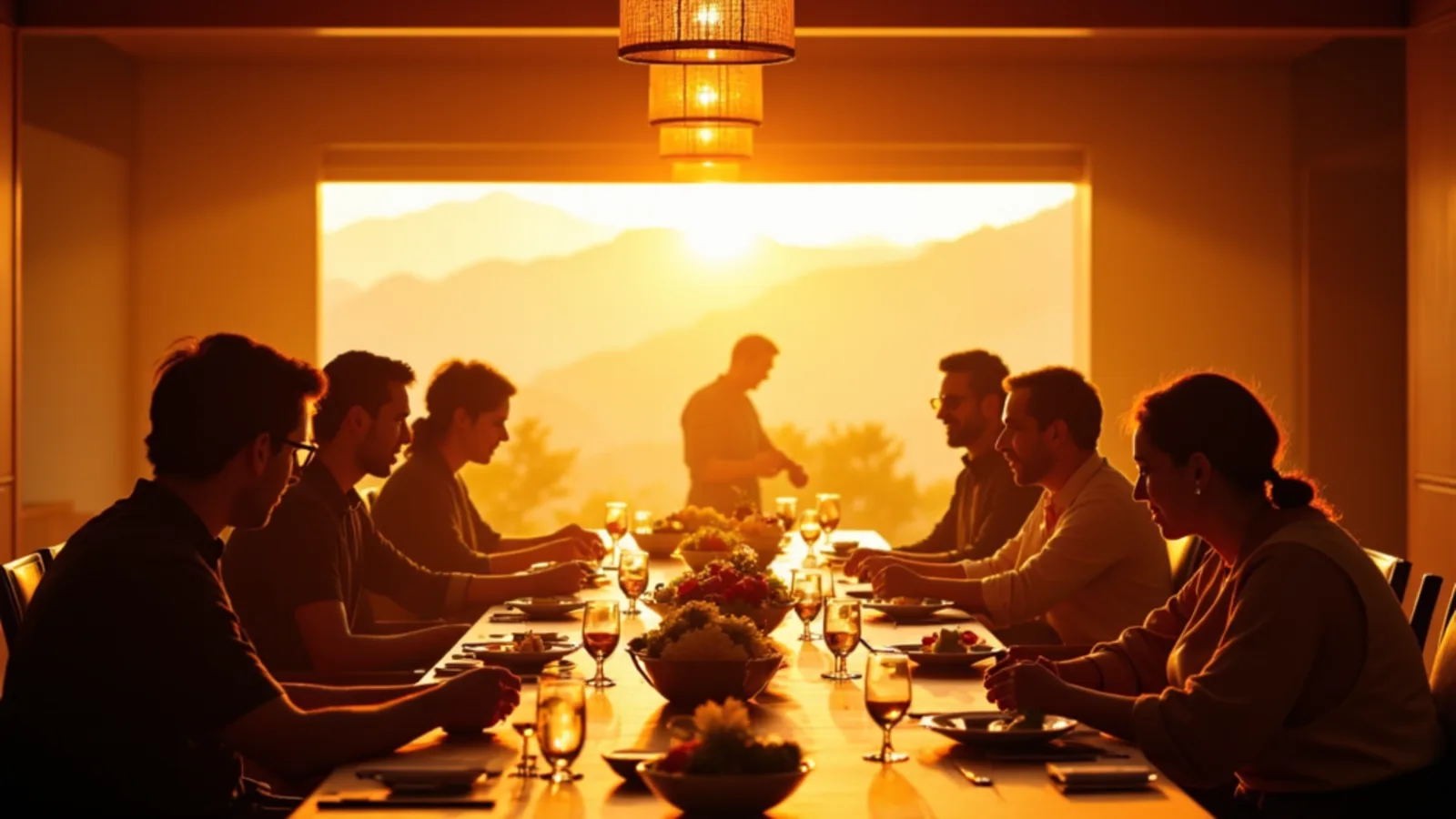
Luxury Japan food and culture tour with Atlas Group Travel: a chef plating a seasonal kaiseki course at an intimate wooden counter, with hinoki surfaces and warm lantern light.

Experiences · Japan

Japan Food & Culture Tours

No country rewards the curious eater like Japan, and none punishes the unplanned one more. The counters that matter seat eight, book weeks ahead, and often will not take a foreign booking without an introduction. Atlas designs private Japan food and culture tours around the meals, the makers, and the moments most travelers never get near.

Overview

The work is getting to the food

Most people who travel to Japan to eat come home having eaten well, but rarely having eaten the things they actually came for. The reason is structural, not luck. The best sushi counters seat a handful of people, take reservations a month out, and fill in minutes. Kaiseki at a serious ryokan is built around the season and the chef, and the rooms that are worth the trip are spoken for early. A sake brewery will pour for visitors who arrive through the right introduction and turn away the ones who knock. The food is the easy part. Getting to it is the work, and it is the work an advisor does on your behalf.

Japan food tours, done properly, are not a string of restaurant bookings. They are a route through the country's cuisine and craft that respects how Japanese food actually works: by season, by region, by the relationship between a chef and the people who supply and sit at the counter. A good itinerary moves you from Tokyo's restaurant density to Kyoto's kaiseki and tea tradition, through Osaka's street food and markets, and into Kanazawa for the seafood, the sake, and the gold-leaf and lacquer crafts that define the place. Along the way it puts you in front of the people who make the food and the objects, not just the food itself.

This is a Japan cultural tour as much as a culinary one, because in Japan the two are inseparable. The tea ceremony, the knife maker, the indigo dyer, the ceramicist, the sake brewer: these are the same tradition the kaiseki chef is working inside. We plan it as one experience, and we secure the parts that cannot be booked from a laptop.

Suitability

Who this trip is best for

  • Food-and-culture enthusiasts who travel to taste and to learn, and who would rather eat at one extraordinary counter than three convenient ones
  • Couples wanting a slower, sensory trip built around meals, markets, and makers rather than a checklist of sights
  • Discerning travelers who have done the headline cities and want depth: the craft workshops, the regional kitchens, the tea tradition, at a pace that leaves room to linger
  • Multigenerational groups where the food is the shared language and a market morning or a noodle-making class gives everyone something to do together
  • Returning Japan travelers who saw the country on a first trip and now want to understand it through its kitchen and its crafts

The Experiences

What we build the trip around

A small number of exceptional experiences, planned deeply rather than crammed.

Kaiseki

Japan's haute cuisine: a sequence of small, seasonal courses that reads the calendar precisely and changes month to month. The best kaiseki is served at ryokan and specialist restaurants where the room, the tableware, and the garden are part of the meal. We match you to kaiseki that suits your palate and your travelers, and we book the rooms worth the trip well ahead.

Sushi counters

The single hardest reservation in Japan, and the one most travelers most want. The counters that matter seat six to ten, the chef works in front of you, and the seats are gone the moment they open. Securing the right counter for your dates, at the level your travelers want, is a large part of what we do here.

Sake breweries

A working brewery visit, with a tasting led by the people who make it, is one of the most rewarding cultural experiences in Japan, and one that usually requires an introduction rather than a booking form. We arrange brewery visits in the sake regions, with context that turns a tasting into an education.

Tea ceremony

The tea ceremony is the clearest window into Japanese aesthetics: the slow, deliberate ritual that shapes everything from the kaiseki course to the way a room is arranged. We arrange private or small-group ceremonies with practitioners who explain rather than perform, in Kyoto and beyond.

Markets

A guided morning at Tokyo's Tsukiji outer market or Kyoto's Nishiki market is where the cuisine makes sense: the producers, the knife shops, the pickles, the specialist stalls, with a guide who can read the labels and order the things you would walk past. Osaka's market and street-food culture adds a louder, earthier counterpoint.

Artisans and craft

The makers behind the meal: knife forging in Sakai and Tokyo, ceramics and lacquerware, gold leaf in Kanazawa, indigo dyeing, washi paper. We arrange workshop visits and hands-on sessions with artisans who rarely open their doors to walk-in visitors.

Where You Go

Four cities, four kitchens

A Japan food and culture tour usually moves through four cities, each with a distinct culinary identity. We sequence them by the trip, not a template.

Tokyo. The best restaurant scene on earth and the natural arrival point. More high-end counters than any city in the world, the Tsukiji outer market for the morning, knife shops in Kappabashi, and neighborhood eating that goes as deep as you want to go. Tokyo is where we secure the headline sushi and the modern kaiseki.

Kyoto. The cultural and culinary heart. Traditional kaiseki, the tea ceremony, tofu and vegetarian temple cuisine, the Nishiki market, and the crafts: ceramics, textiles, lacquer. Kyoto rewards more time than most itineraries give it, and it is where the food and the culture become one thing.

Osaka. Japan's kitchen, and its loudest table. Street food, the standing bars, takoyaki and okonomiyaki, the Kuromon market, and a knife-making tradition in nearby Sakai that supplies chefs worldwide. Osaka is the counterweight to Kyoto's refinement.

Kanazawa. The quieter highlight, on the Japan Sea coast. Exceptional seafood, one of Japan's great markets at Omicho, a strong sake and craft tradition, gold-leaf and lacquerware workshops, and far fewer visitors than the Tokyo, Kyoto, and Osaka core. Kanazawa is where second-time travelers and serious eaters often find the trip's best meals.

When to Travel

Best time for a Japan food trip

WindowConditionsOn the plateAvailability
Late March to early AprilCherry-blossom seasonBamboo shoots, sea bream, spring vegetablesBooks furthest ahead
May, October to NovemberMild, comfortable travelAutumn menu: matsutake, chestnuts, best fishEasier than blossom
December to FebruaryCold and clearCrab, hot pot, richest fish, sake at its bestStrong value
June to AugustHot, humid, rainy spellSummer menuLeast comfortable window

Japanese cuisine is seasonal to its core, so timing changes what is on the plate as much as the weather. Spring overlaps the blossom and the most sought-after window; autumn and late spring are the sweet spots for a food trip; winter is arguably the best eating season, with crab on the Japan Sea coast and onsen between meals. If the blossom matters to your travelers, see our Japan Cherry Blossom Tours.

Cost Guidance

What a Japan food tour costs

Planning range, per person, for a nine-to-twelve-day food and culture trip, excluding international airfare: $6,000 to $15,000+. A food-led trip can sit anywhere in that band depending on the dining tier, the share of high-end counters and kaiseki, the accommodation level, and whether the trip is private throughout. The very top counters and a stay across the best ryokan push the top of the range; a well-planned trip weighted toward markets, mid-tier counters, and craft experiences sits lower while losing none of the depth. The single largest variable is how many of the hardest reservations you want, since those carry both a cost and a planning premium. For the full breakdown and sample budgets, see our Japan Tour Cost guide.

Comfort & Pace

Is this easy to travel at a gentle pace?

Yes, and a food and culture trip is one of the most rewarding ways to see Japan slowly, since the pleasures are sensory and slow rather than physically demanding. Some traditional restaurants and ryokan seat guests on the floor, so we choose table options and chair-friendly rooms wherever needed, and confirm it per venue rather than assuming. Allergies and restrictions are very manageable when communicated in advance and in Japanese, and we brief every kitchen ahead of time. Market mornings and food walks involve a couple of hours on your feet, so we pace them, build in seated breaks and tastings, and shorten the walking where mobility is a consideration. We keep the days realistic, one anchor experience and one major meal, with luggage forwarding so no one carries bags through stations, and guides at the moments that matter with 24-hour support throughout.

Sample Itinerary

Japan Food & Culture, 10 days

  1. Day 1. Arrive Tokyo, settle in, an easy first dinner near the hotel.
  2. Day 2. Tsukiji outer market in the morning with a food guide, Kappabashi knife shops, evening at a secured sushi counter.
  3. Day 3. Tokyo neighborhood eating and a modern kaiseki dinner, with time for the city's depth.
  4. Day 4. Bullet train to Kyoto, afternoon tea ceremony with a practitioner who teaches as well as serves.
  5. Day 5. Kyoto Nishiki market with a guide, an artisan workshop, traditional kaiseki dinner at a ryokan or specialist restaurant.
  6. Day 6. Temple cuisine and a craft district, with unstructured time to wander Kyoto.
  7. Day 7. Day trip to Osaka: Kuromon market, street food, the standing bars, optional Sakai knife workshop.
  8. Day 8. Train to Kanazawa, Omicho market, gold-leaf workshop, seafood dinner.
  9. Day 9. Kanazawa sake brewery visit with a guided tasting, the gardens and craft museums, a final regional dinner.
  10. Day 10. Return to Tokyo or onward to the international departure.

Planning a group of 15 or more? We arrange block hotel reservations, reserved bullet-train cars, a trip manager on the ground, and group dining built around the way Japanese kitchens actually operate, with a mix of private dining rooms, venue buyouts, and split seatings at the best counters. See how groups travel with Atlas.

Questions

Japan food tour FAQ

Are food tours in Japan worth it?

For most travelers, yes, and more so than almost anywhere. The best of Japanese cuisine sits behind reservations, introductions, and language barriers that are hard to cross independently. A well-planned food tour gets you to the counters, kaiseki rooms, breweries, and markets you would otherwise miss, with a guide who can read the menu and order what matters.

Where should I do a food tour in Japan?

The strongest food trip moves through Tokyo for the restaurant density and the headline counters, Kyoto for kaiseki and the tea tradition, Osaka for street food and markets, and Kanazawa for seafood, sake, and craft. Each city has a distinct culinary identity, and the combination is what makes the trip.

How much does a Japan food tour cost?

Roughly $6,000 to $15,000+ per person for nine to twelve days, excluding international flights, driven mainly by the dining tier, the share of high-end counters and kaiseki, and the accommodation level. See our Japan Tour Cost guide for the full breakdown.

What is the best time of year for a Japan food trip?

Spring and autumn are the most comfortable and offer the best seasonal menus, while winter is arguably the best eating season for crab, hot pot, and sake on the Japan Sea coast. The season changes what is on the plate as much as the weather.

Can a Japan food tour accommodate dietary restrictions?

Yes, when communicated in advance and in Japanese. We brief every kitchen ahead of time and choose venues that can genuinely accommodate allergies and restrictions, rather than discovering a problem at the table.

Ready When You Are

Plan your Japan food and culture tour.

Tell us about your travelers, your dates, and the meals and makers you want to reach. A named specialist returns within twenty-four hours with a first sketch of the journey.